
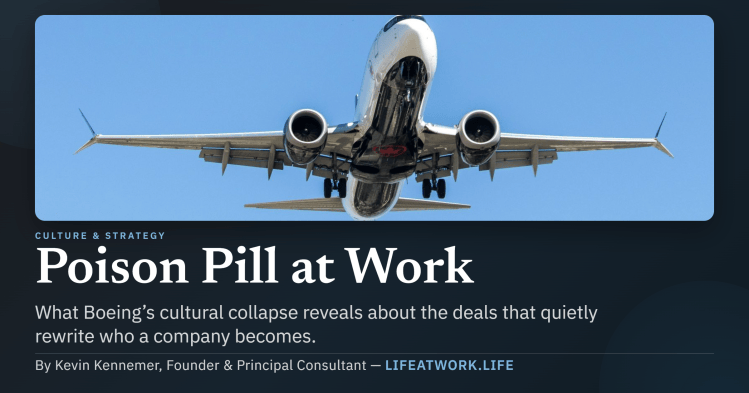
Two modern jetliners fell from the sky just five months apart, killing 346 people. Men, women, and children lost their lives in minutes — lives that ended in terror.
On October 29, 2018, Lion Air Flight 610 plunged into the Java Sea, killing 189 people — passengers whose families were waiting at home, coworkers expecting them at morning meetings, and loved ones anticipating their return from long‑planned trips.
Then, less than five months later, on March 10, 2019, Ethiopian Airlines Flight 302 crashed near Bishoftu, Ethiopia, killing 157 more — travelers headed to vacations, business commitments, and reunions that would never happen.
Two continents. Two airlines. Two brand‑new Boeing 737 MAX aircraft. And one cultural failure that made both tragedies possible.
When the Real Failure Is Not Mechanical
When disasters like these occur, leaders often look to engineering flaws, regulatory gaps, or breakdowns in process — but the truth runs deeper. Every leadership decision carries consequences, and some of those consequences ripple quietly for years before revealing their full weight. Acquisitions sit high on that list: seemingly strategic moves that can either strengthen a company’s identity or silently unravel it from within.
Acquisition Assimilation
Companies in acquisition mode often focus on financial fit, strategic alignment, and market expansion. But there is a question many overlook, and it often determines whether the deal becomes a catalyst or a catastrophe. Will the acquired company assimilate into your culture, or will its culture dominate yours?
Leaders who fail to understand the culture they are swallowing risk ingesting a poison pill.
Boeing’s Original Cultural DNA
For most of the 20th century, Boeing was an engineer’s company. It lived in Seattle because that is where the airplanes were built. Leaders walked the factory floors. Decisions were made by people who had spent entire careers around aircraft. One of Boeing’s core beliefs could be summed up simply as a question: Is it safe, and is it the best plane we can build?
That culture — proximity, mastery, truth — produced the 747, the 767, and the 737. Engineers and leaders disagreed often, and those disagreements led to decisions that made the airplanes better.
The Merger That Rewired the Culture
Then came the financial decision that changed everything.
In 1997, Boeing acquired McDonnell Douglas. But as many observers have argued, the merger was culturally inverted — meaning that although Boeing was the acquiring company on paper, McDonnell Douglas’s management philosophy ultimately became dominant.
The widely cited commentary that McDonnell Douglas acquired Boeing using Boeing’s own money is not a literal financial fact, but it is a powerful truth. It highlights how a cultural shift, not just a corporate transaction, can alter the trajectory of an entire organization.
The Slow Erosion of Engineering Excellence
Investigations, congressional reports, and internal Boeing communications show that beginning in the late 1990s and accelerating through the 2000s, Boeing placed increasing emphasis on costs, schedules, and shareholder value. The company that once centered its identity on engineering excellence shifted toward shareholder optimization.
Their culture did not collapse overnight — it eroded over time. And when Boeing moved its headquarters from Seattle to Chicago in 2001, the separation became both physical and cultural. The executives left Seattle, but the engineers stayed.
Leadership stopped walking the floor. Distance replaced connection.
Where Companies Lose Their Way
Profits matter. Strategy matters. Customers and investors matter. But none of it works without the people who carry the mission forward. Employees move the needle — not because management demands it, but because culture enables it.
A culture increasingly shaped by financial and competitive pressure allowed engineering concerns to be minimized, training to be reduced, and a flawed system to be certified. The two 737 MAX crashes killed 346 people, and Boeing ultimately paid more than $2.5 billion in criminal penalties, compensation, and settlements — with the total financial impact exceeding $20 billion.
In this monumental case, when culture fails, the costs are measured not only in dollars, but in lives.
Culture Is Not Soft — It Is Structural
Culture determines whether truth travels upward, whether dissent is welcomed, and whether safety is protected. And it raises a simple, unavoidable question: Do you want to fly on an aircraft designed by a company where employees trust their leaders, feel safe to speak up, and engage in healthy debate to build the best and safest airplanes in the world?
The Poison Pill Revealed
In the end, Boeing’s story makes one truth impossible to ignore: the 737 MAX crashes were not just engineering failures — they were cultural failures born from a poison pill swallowed decades earlier.
The merger that rewired Boeing’s identity ultimately rewired its judgment. And the consequences of that cultural inversion echoed all the way to the Java Sea and the fields of Ethiopia — to families waiting at home, to loved ones expecting a knock on the door, to reunions that never happened.
So yes — company culture matters. It matters more than strategy, more than structure, and more than any spreadsheet can capture. Because when culture fails, people pay the price.
___
Kevin Kennemer is a workplace strategist, writer, speaker, and founder of LifeatWork, with more than 30 years of experience helping organizations turn culture and leadership into measurable business performance. While he is an expert in compensation and benefits plan design and communication, his work connects a strong workplace culture directly to revenue growth, stronger customer loyalty, and increased market share—making culture a competitive advantage, not simply an employee initiative.
 LifeatWork