


Flexibility at Work

The Living Blog

Flexibility at Work

By Kevin Kennemer · December 18, 2019

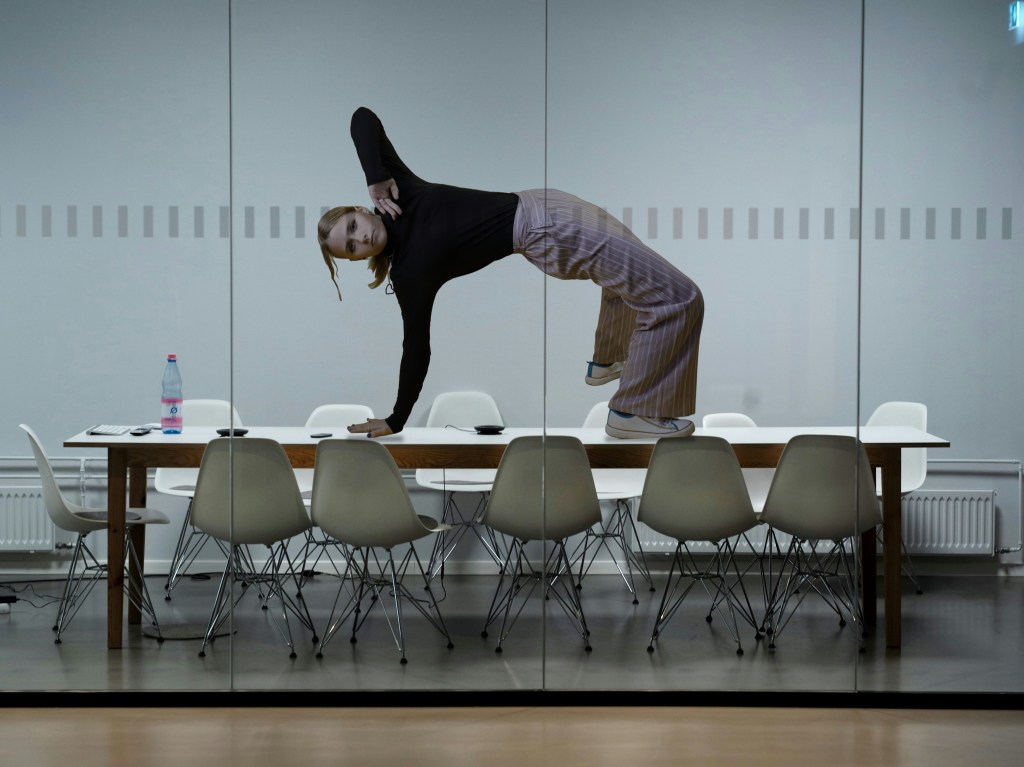
Person bending backward into a bridge pose on top of a conference room table

You created your plan to complete a project but an issue arises requiring you to change that plan. In life and work, you must be flexible.

Change is coming. Conditions will change. Clients will decide to go a different way. Coworkers will have a better idea. Your leader will change the parameters of the project. These things are inevitable.

Flexibility is being ready, willing and able to change based on different circumstances. The most successful people, especially business owners and executives, foresee upcoming change and adjust.

We must not be content with the status quo. We must be content with change. We must accept that the status quo will not be the status quo.

Change should not be seen as the enemy. It is your chance to make things better. Adjusting to different circumstances makes you relevant. People who are unwilling to make changes are typically difficult to work with. Those unwilling to make adjustments fall behind.

Making changes requires more effort, so those who avoid extra effort try to avoid change.

Flexibility is not a bad word. It is a quality that makes you more valuable.

Grace at Work

The Living Blog

Grace at Work

By Kevin Kennemer · December 17, 2019

Manager listening kindly to an employee who sits with his head bowed and hands clasped

Everyone deserves a second chance. When you make a mistake at work, and you will, being shown grace is such a relief. Knowing your supervisor lives and works with grace relieves crippling fear.

Since you appreciate grace, you should show grace to others. Show grace to your coworkers, both up and down the chain of command. Show grace to customers, waiters, in traffic (a very hard one), family, strangers, flight attendants, retail workers, referees, Uber drivers, and your dog.

I have spent a lot of time researching and creating great places to work. Truly great workplaces allow room for grace. Employees who know their superiors lead with grace will deliver higher performance. Grace drives out fear. Removing fear helps to create great organizations.

It’s the simple things that make the biggest difference. Grace at work is simple but extremely effective.

Peace at Work

The Living Blog

Peace at Work

By Kevin Kennemer · December 10, 2019

Hikers on a trail through green mountain meadows

Peacemaker vs. Peacekeeper. There is a big difference between these two terms.

Peacekeepers try to maintain peace. Peacemakers create an environment of peace.

Peacekeepers are weak. Peacemakers are strong.

Peacekeepers are passive. Peacemakers are aggressive.

Peacekeepers maintain the status quo. Peacemakers disrupt the status quo.

Peacekeepers are managers. Peacemakers are leaders.

Peacekeepers think they are always right. Peacemakers admit when they are wrong.

Peacekeepers avoid disagreement. Peacemakers know disagreements lead to better decisions.

Peacekeepers massage the egos of their superiors. Peacemakers are not afraid to challenge their superiors.

Peacekeepers expect people to agree with them. Peacemakers expect their people to disagree with them.

Peacekeepers try to hold things together. Peacemakers expect their people to hold things together.

Peacekeepers allow apathy. Peacemakers have high expectations.

Peacekeepers don’t want to offend anyone. Peacemakers are not afraid to offend people.

Peacekeepers try to appease entitled employees. Peacemakers will force entitled employees out of the organization.

Peacekeepers allow complaining. Peacemakers want solutions.

Peacekeepers will compromise their values. Peacemakers live their values.

If you want to be a great leader, I challenge you to make a positive difference in your workplace and become a peacemaker.

Family at Work

The Living Blog

Family at Work

By Kevin Kennemer · November 19, 2019

Family playing together on the beach

I love my family. Here are some of the things I enjoy doing with my family…

  • Eating
  • Vacations
  • Playing
  • Helping
  • Projects
  • Holidays
  • Parties
  • Talking
  • Fun
  • Laughing

Your fellow employees are your work family. Many of the things you do with your real family you should do with your work family. If you do this, your performance as a team will be better.

You shouldn’t have to leave your heart at home. You can bring it to work too, says Joel Manby, former CEO of SeaWorld Parks & Entertainment.

You spend at least 40 hours/week with your team so make it count. Your life at work and home should both be fulfilling. That means you must work together and share the good times, as well as hard times.

If this idea resonates with you, I recommend you read Love Works by Joel Manby.

Character at Work

The Living Blog

Character at Work

By Kevin Kennemer · November 17, 2019

Green street sign reading Character

Effective leaders exude executive presence, according to Suzanne Bates, an executive consultant and coach. People can sense if you are a leader when you enter a room. Bates explains in a Forbes article, the following are ingredients to executive presence:

Character: authenticity, integrity, concern, restraint, humility

Substance: practical wisdom, confidence, composure, resonance, vision

Style: appearance, intentionality, interactivity, inclusiveness, assertiveness

Did you notice the quality of character is first?

God told Samuel, a prophet, when selecting David as the next king of Israel, to not consider his appearance or his height. “The Lord does not look at the things people look at. People look at the outward appearance, but the Lord looks at the heart.” 1 Samuel 16:7b NIV

Character is closely aligned with your heart.

Long-standing, effective, and great leaders have character. Also aligned with heart and character, culture fit has been elevated above skills. Great workplaces take the time to peer into a candidate’s heart. No matter how skillful or good-looking you are, will your contributions be in-line with an organization’s mission and vision? Will you treat people with respect?

To be an effective leader, to possess executive presence, your character is first. You may have been promoted up the career ladder and hold an executive-level position, but at the end of your life, without character, without a good heart, you will not be considered as someone who made a positive difference in people and the community.

Positive Leaders at Work

The Living Blog

Positive Leaders at Work

By Kevin Kennemer · November 12, 2019

Smiling professional seated at a table

Not changing the oil in your car is a bad idea. The engine will start running too hot and inefficiently, and parts will begin to warp and wear out. Eventually, the engine will get too stressed, shut down completely, and need to be replaced.

Running an office with a negative management style has a similar impact on people. Leading people with a positive outlook is like running an efficient engine with regular oil changes.

Negative managers and cultures cause people to be less efficient, stressed, eventually leading to burnout and turnover.

A positive leader helps create better working relationships among employees, motivates people to do their best work, improves customer service, and increases discretionary effort within the 9 to 5 workday. Another reason positive leadership is important; it’s good for personal and family lives.

You can choose to be negative and become a drain on your workplace and community. Or, you can live a positive life and take responsibility for your people at work.

I’m talking about a genuine, caring and positive outlook. Faking it doesn’t work.

Positive work environments outperform their competition. A positive work environment equals positive financial results.

Regularly change your oil at work.

Presence at Work

The Living Blog

Presence at Work

By Kevin Kennemer · November 11, 2019

Man at his desk on a video call with twelve colleagues shown on his monitor

With the advent of mobile technology, you can work almost anywhere and anytime. Being present at work does not mean you are productive. Getting things done can also happen at home, a park, on a plane, Starbucks, and more.

Presenteeism is a problem in the workplace. You might be present and in your cubicle, but your mind is somewhere else. According to a study in Canada, lost productivity from presenteeism was 7.5 times greater than productivity loss from absenteeism.

I am not advocating that you completely disappear; just that work can be done away from the office. If your boss expects you to be in your seat all the time, they are not a very good 21st Century leader.

Obviously, if you are the receptionist, you cannot great people in Starbucks. There are some limitations to this work philosophy.

We need to take advantage of the array of benefits from mobile technology. One of the benefits is the ability to stay connected anytime. This can be a pain and intrusion into your life if you allow it, or you can use it to be more productive.

My recommendation is that you be productive wherever you are. Stay focused, make a list of action items and tackle them. Mornings at home, while drinking coffee, before going to the office are my most productive time. It allows me to hit the ground running when I land in my office.

You should also make time to have fun in the workplace. Develop great working relationships with the people in your office. This will also help you and your people to be productive too.

Arianna Huffington, a very successful billionaire entrepreneur, once stated her best ideas have never happened in the office.

My advice? Just get’r done wherever you are.

Compassion at Work

The Living Blog

Compassion at Work

By Kevin Kennemer · November 10, 2019

Professional at her laptop with her head in her hands, looking stressed

Research shows one of the most important needs employees desire at work is recognition. I submit that employees also desire compassion at work. They want to know when a mistake occurs, and they will make mistakes, management will see the issue from the employees point of view.

When mistakes are made, the priority is not to berate the employee for making the error, the priority is to determine a solution. Management, however, often prioritizes their focus on determining who is responsible for the mistake and making them feel guilty.

Blame accomplishes nothing.

Showing compassion while determining a solution creates an environment of partnership with your employees. Compassion means you deal with people with grace.

Having a spirit of grace in the workplace does not mean if an employee continues to make the same mistake, we should overlook the issue. The first mistake requires a joint approach to finding a solution. The second time the same mistake happens, more intensive coaching is required. The third same mistake becomes a serious issue.

Continuous mistakes, however, will be very rare with proper coaching and a spirit of compassion.

Compassion works at work.

Welcome!

The Living Blog

Welcome!

By Kevin Kennemer · November 9, 2019

White script Welcome sign mounted on a dark wood wall

You spend eight or more hours a day at work. Your projects and day-to-day responsibilities, along with personal interactions with leadership and fellow employees, impact your life. As you walk down the halls, spend time in meetings and work in your office, you experience both positive and negative interactions.

Experiences at work, both positive and negative, follow you from the parking lot, into your car, and all the way home into your living room.

This blog is about these issues; how work impacts life and how life impacts work. I want to help you and make a positive difference as you encounter life at work.

Blessings to you,

Kevin Kennemer, LifeatWork